Breaker or RCD?
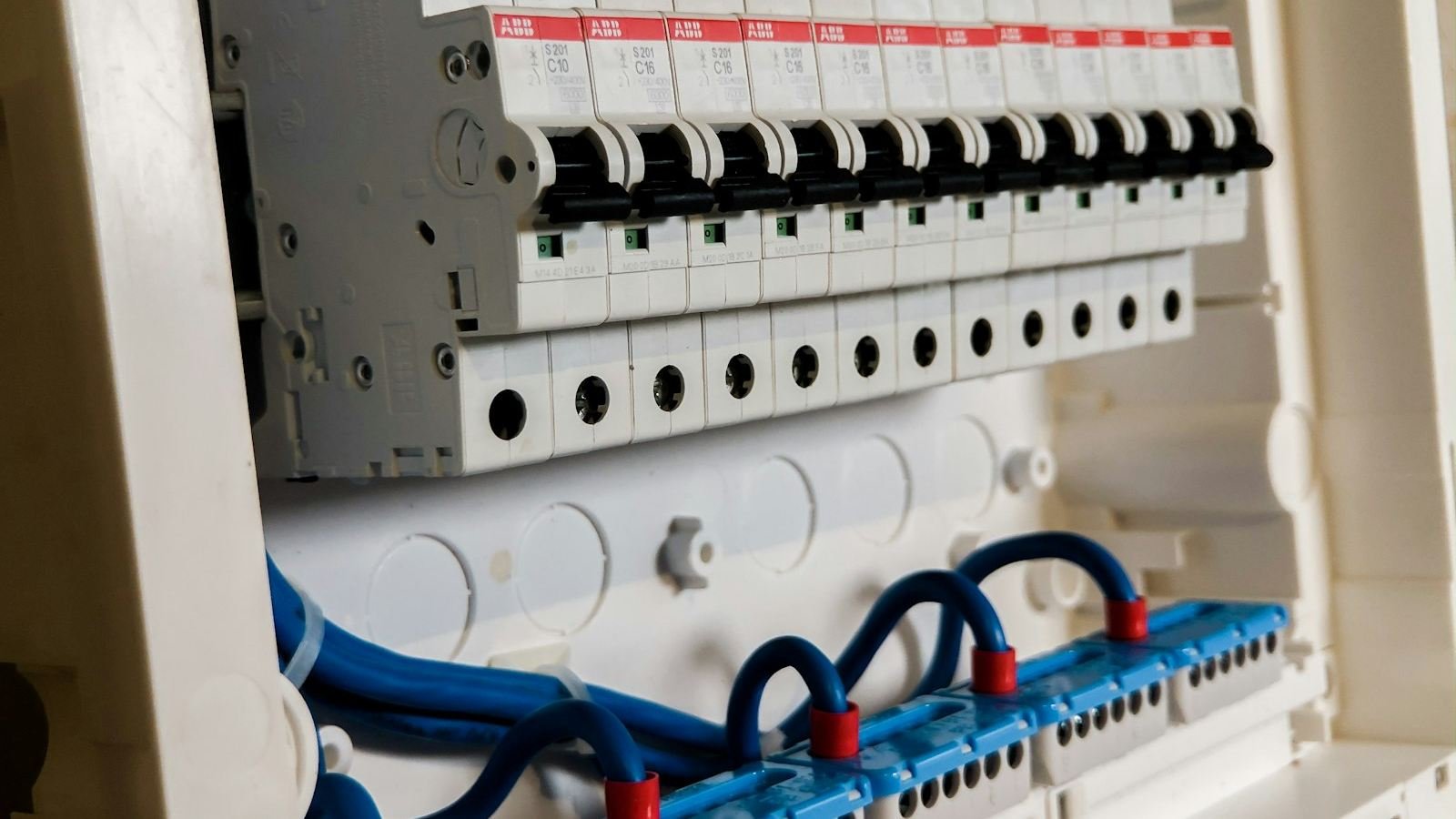
Your fuse box has two kinds of protection. Circuit breakers (the small switches, one per circuit) protect the cables from overload and short circuits. The residual current device (RCD), the wider switch with a “T” test button, protects you from electric shock when current leaks to earth.
If one breaker trips
- Overload: too many appliances on the same circuit, for example oven, dishwasher and kettle in the kitchen at the same time.
- Short circuit: it trips immediately when you switch it back on, or as soon as you turn on a specific appliance or light.
- A loose connection or an old, worn breaker.
If the RCD trips
- Moisture in an outdoor socket, a garden light or the bathroom, often after rain.
- An appliance with a leak: water heater, washing machine, fridge, oven.
- A damaged cable inside the wall, for example from a nail or drill.
What you can safely do yourself
- Unplug as many appliances as you can.
- Switch all breakers down, then switch the RCD (or main switch) back up.
- Switch the breakers back up one at a time. The one that trips the RCD shows you which circuit has the problem.
- Plug the appliances back in one at a time to see if one of them is to blame.
Never hold a breaker up by hand and never replace it with a larger one. If you smell burning, see black marks on a socket or the fuse box feels hot, switch off the main switch and call us.
When to call an electrician
- It trips again and again and you cannot find the cause.
- It trips with all appliances unplugged.
- Your fuse box is old, with screw-in fuses or no RCD at all.
Not sure? Take a photo of your fuse box and send it to us on Viber or WhatsApp. We will tell you what is needed.